


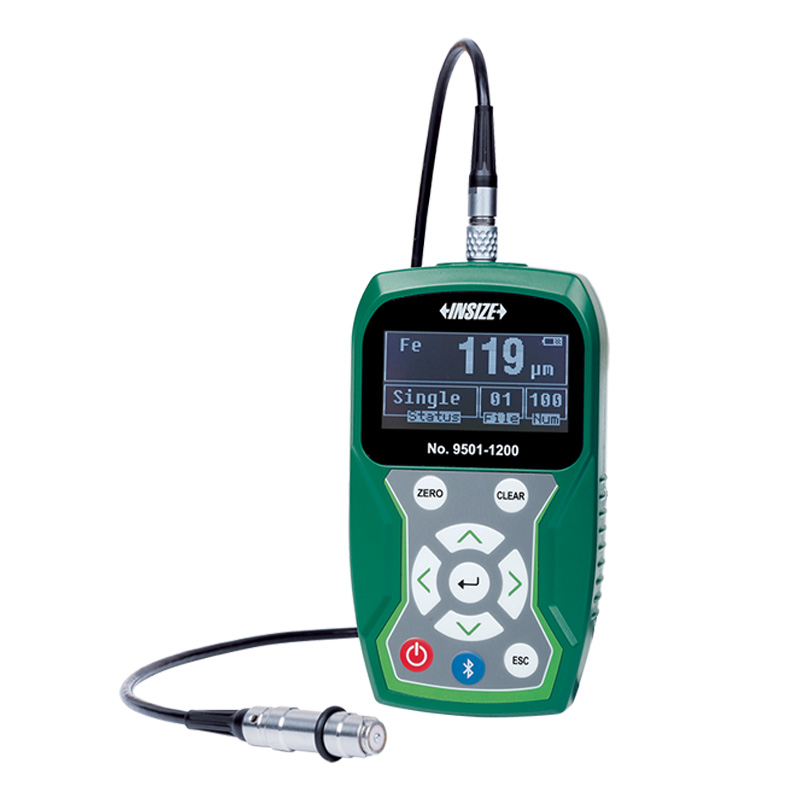
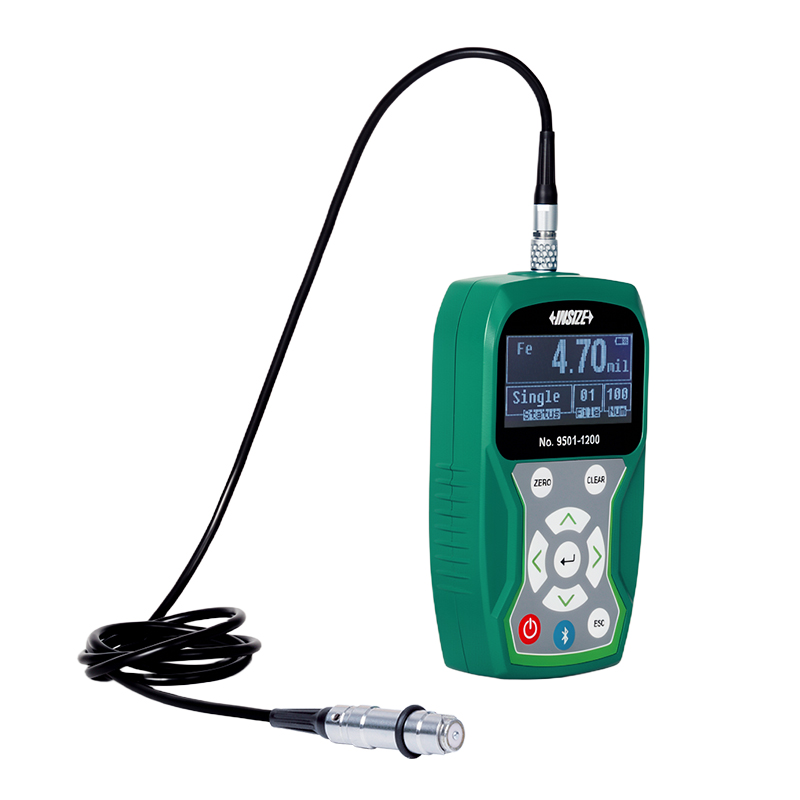
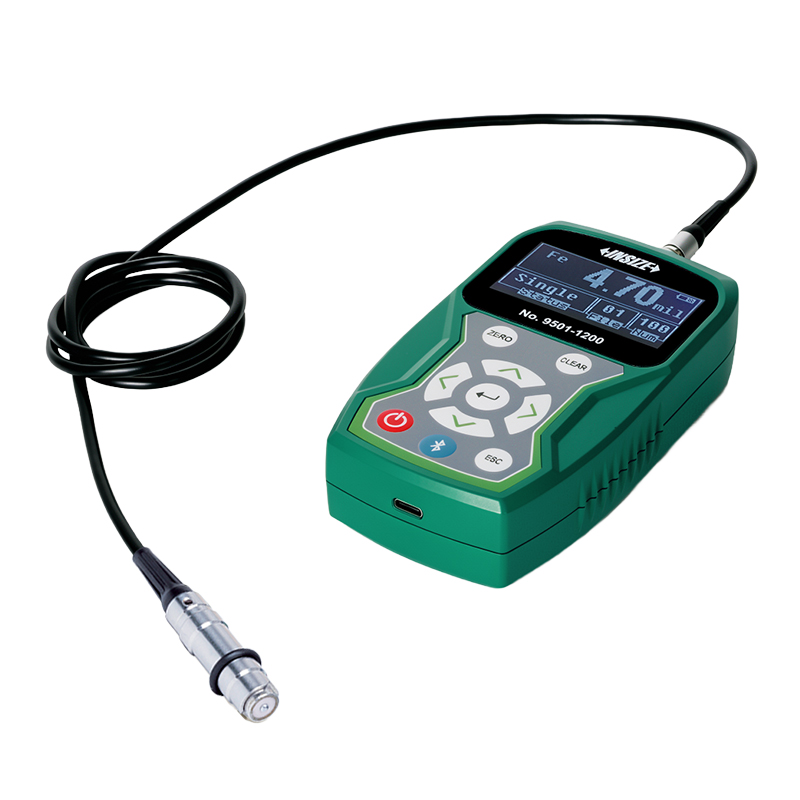
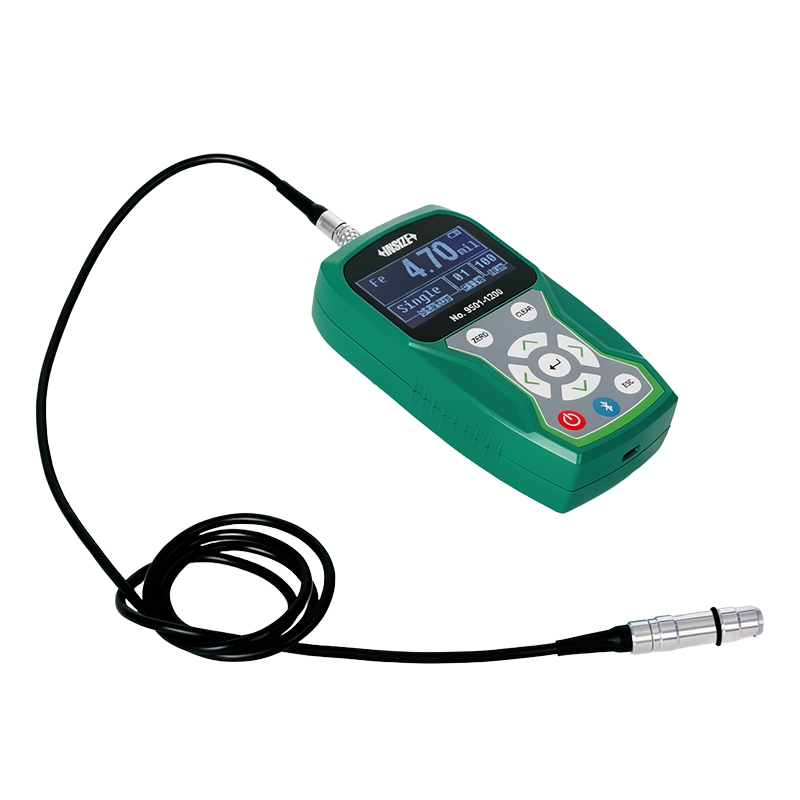
Coating Thickness Gauges (Standard Type)
Code: 9501-1200


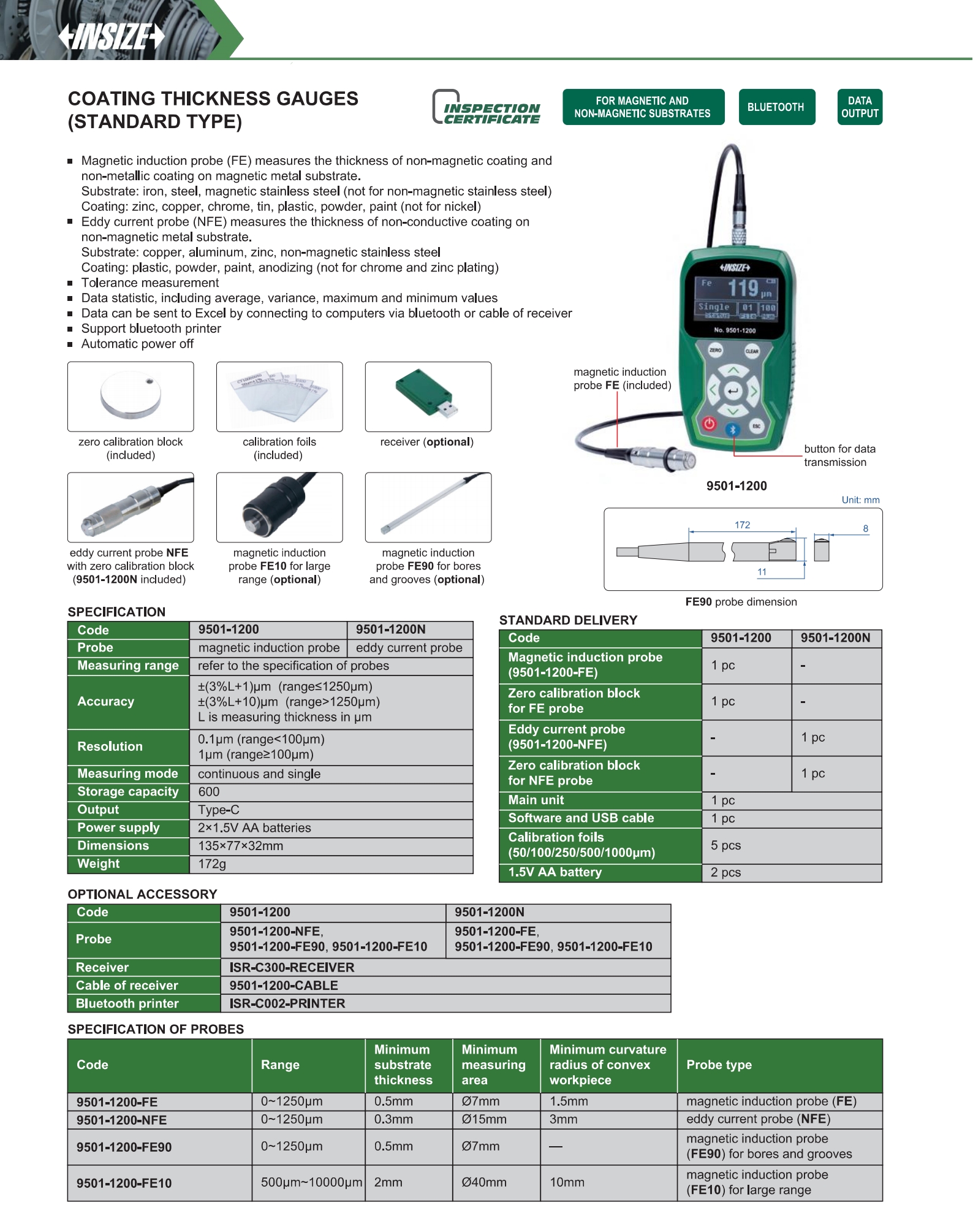
Magnetic induction probe (FE) measures the thickness of non-magnetic coating and non-metallic coating on magnetic metal substrate.
Eddy current probe (NFE) measures the thickness of non-conductive coating on non-magnetic metal substrate.
Tolerance measurement
Data statistic, including average, variance, maximum and minimum values
Data can be sent to Excel by connecting to computers via bluetooth or cable of receiver
Support bluetooth printer
Automatic power off
| Code | Range | Accuracy | Resolution | Data transmission |
|---|---|---|---|---|
| 9501-1200 | 0~1250μm | ±(3%L+1)μm (range≤1250μm), ±(3%L+10)μm (range>1250μm) | 0.1μm (range<100μm), 1μm (range≥100μm) | Type-C |
| 9501-1200N | 0~1250μm | ±(3%L+1)μm (range≤1250μm), ±(3%L+10)μm (range>1250μm) | 0.1μm (range<100μm), 1μm (range≥100μm) | Type-C |



View the complete
product specifications
FAQ
How can I choose between FE and NFE probes? Can they be used interchangeably?
The FE probe or NFE probe cannot be used interchangeably. Please choose according to the substrate and coating.
● Magnetic induction probe (FE):
Substrate: iron, steel, magnetic stainless steel
Coating: zinc, copper, chrome, tin, plastic, powder, paint (Not suitable for non-magnetic stainless steel substrates or nickel coatings)
● Eddy current probe (NFE):
Substrate: copper, aluminum, zinc, non-magnetic stainless steel
Coating: plastic, powder, paint, anodizing (Not suitable for chrome or zinc plating)
Can a flat calibration foil be used for curved workpieces?
No. It is recommended to calibrate the instrument using a standard film sample on an uncoated substrate sample with the same curvature before taking measurements.
Can I measure a high-temperature workpiece directly?
Not recommended. High temperature may affect the probe and cause measurement errors. Please allow the workpiece to cool to room temperature before measurement.
Will measuring too close to the edge affect the reading?
Yes. If the probe is too close to the edge, the magnetic field or eddy current may leak at the edge and cause inaccurate readings. Keep the measuring point far from the edge.