


Improving Surface Roughness Inspection Efficiency in Rail Equipment Manufacturing
05-03-2026
Background
In the rail equipment manufacturing sector, surface quality inspection is fundamental to ensuring dimensional accuracy, functional performance, and long-term reliability. For suppliers of critical components, surface roughness measurement is a high-frequency necessity that dictates both production efficiency and quality consistency. However, as production volumes scale and component geometries grow increasingly complex, traditional inspection methods can become a strategic bottleneck. In many modern workshops, this routine task has shifted from a standard procedure to a primary limiting factor in overall throughput.

Challenge
● Limitations of Conventional Roughness Measurement Methods
The workshop had previously relied on traditional integrated roughness testers and split-type instruments. While these devices were capable of basic measurements, several limitations emerged under real production conditions.
● Manual Data Handling
Measurement results were recorded manually and later transferred into digital reports. This workflow required additional time and introduced the risk of transcription errors. When digital analysis or report generation was needed, wired data connections were required, which reduced flexibility in crowded workshop environments.
● Limited Adaptability to Complex Measurement Scenarios
As the variety of workpieces increased, measurement locations became more diverse, including confined spaces, deep holes, grooves, and transverse surfaces. Frequent changes in setups and probes were required, making it difficult to maintain a consistent and efficient inspection process.
● Challenges with Multi-Standard Requirements
Different customers required compliance with various international roughness standards. In addition, wide roughness ranges demanded sensors with larger measurement capacity. Switching between different instruments to meet these requirements increased inspection time and complexity.
Solution
How INSIZE Separable Roughness Testers Improve Production Efficiency?
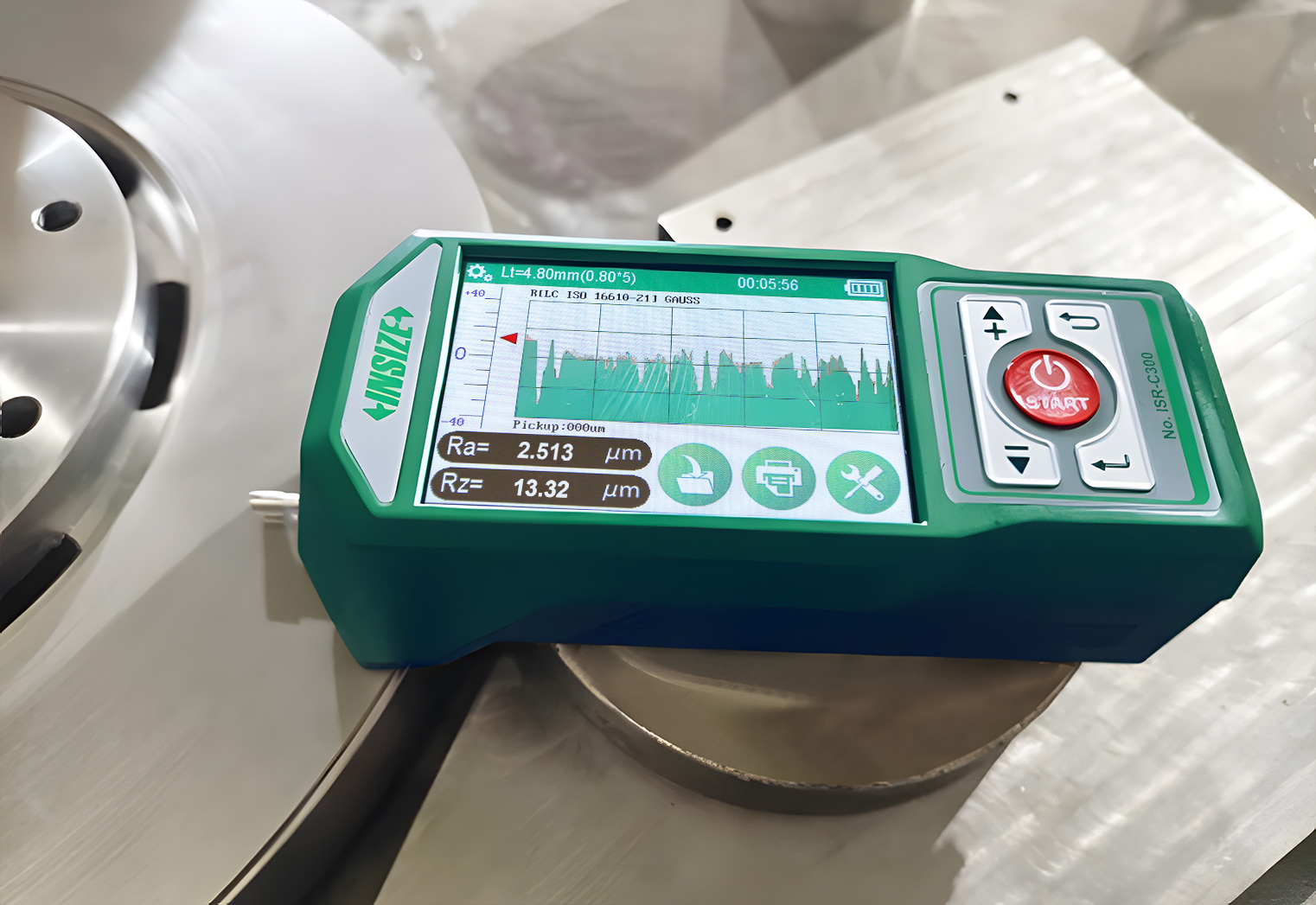
To address these challenges, this manufacturing workshop implemented the INSIZE ISR-C300 separable type roughness tester to
optimize measurement efficiency and data integrity in its production environment.
● Intelligent Data Processing and Standardized Reporting
Measurement data is transmitted via Bluetooth in real-time to Excel files as a keyboard signal, completely eliminating manual transcription errors. With mobile app connectivity for remote monitoring and instant multi-format report generation, the system ensures data traceability and a professional image during quality audits. This shifts quality control from "after-the-fact" organizing to "real-time" generation.
● Flexible Configuration for Diverse Workpieces
The gauge features a detachable design, allowing the unit to be used independently or paired with magnetic bases, height gauges, and marble stands for narrow or complex spaces. A wide array of specialized probes—including small-hole, groove, and transverse options—enables a "one-size-fits-all" solution. This versatility standardizes inspection workflows while reducing equipment costs and operator training difficulty.
● Comprehensive Parameters and High-Range Sensing
The system supports 36 measurement parameters and is fully compatible with international standards such as ISO, DIN, ANSI, and JIS. Equipped with a high-range sensor (±200µm), it easily accommodates various surface conditions. The simplified needle adjustment further enhances user convenience, ensuring high-precision measurement across a broad spectrum of technical requirements.
Impact on Inspection Workflow
By adopting a more flexible and digitally integrated measurement solution, the workshop improved the efficiency and consistency of surface roughness inspection. Data handling became more standardized, setup time was reduced, and inspection processes were better aligned with production requirements.
Rather than changing inspection accuracy targets, the improvement focused on workflow integration, adaptability, and operational stability, allowing surface roughness measurement to better support production throughput and quality control.

Conclusion
Surface roughness inspection remains a fundamental requirement in rail equipment manufacturing and other precision engineering fields. This case illustrates how a modular and adaptable measurement approach can help manufacturers manage increasing inspection demands while maintaining data consistency and operational efficiency.
For manufacturers facing similar challenges—such as diverse measurement scenarios, multi-standard requirements, and high inspection frequency—flexible and process-oriented surface roughness measurement systems can play an important role in improving inspection performance without adding unnecessary complexity.